Posts

Showing posts with the label the-lion-king

The Lion King - The History

Image
The Lion King idea was first developed by Roy Disney, Peter Schieider and Katzenberg while they were out in Europe busy promoting Oliver and company. Katzenberg loved the idea of making a movie set in Africa and started coming up with more ideas of the movie. Thomas Schumancher who was one of the producers jumped onto the project and contributed. One of the earliest versions drafts of the movie were done by Thomas Disch. The story was first titled, “King of the Kalahari.” Linda Woolverton then spent a year coming up with the script and retitled it, “King of the Beast” and then “King of Jungle”. Woolvertons storyline was based on lions and baboons with Scar being the leader of the baboons and some characters such as Rafiki being a cheetah. The story line was also more violent and not child-friendly. However as more directors and producers hoped on the project things began to change. They later renamed the title to, “The Lion King.” Pocahontas was also in production during th...

The Lion King - The Plot

Image

The Lion King - The Characters

Image
1 Simba  which means lion Mufasas son who is cheerful and cant wait to be the king, but this dream was washed down the drain when his father passed away and scar the fathers brother wanted the kingship. He grows into a fairly wild and carefree adult 2 Mufasa which means Simba's father who is really good at parenting always wanted the best from his son. Proud, majestic and knowledgeable king. 3 Nala which means a gift Simba's bestfriend, but on the other side they had feelings for each other but they never admitted to love each other in a romantic way until they were reunite. 4 Pumbaa which means stunned clumsy warthog who is also a slow thinker. 5 Rafiki which means friend the baboon who knew all the secrets but he was always singing his own songs and going his own way. 6 Timon which means respect he is hyperactive and he has the brains of his own 7 Scar the cruel uncle who wanted kingship and he would do anything to get it. 8 The Hyenas there w...

The Lion King - Production

Image
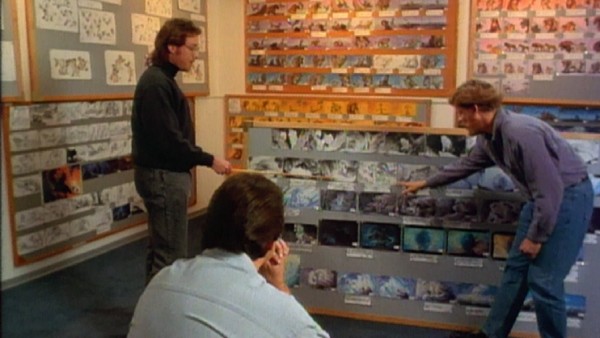
The Lion King is an animated musical film produced by Walt Disney Feature Animation. Its development began in 1988, between Jeffrey Katzenberg, Roy E. Disney and Peter Schneider whilst in Europe promoting Oliver & Company . By fall, Thomas Disch had written the first treatment for the project (which was then known as The King of the Kalahari , later King of the Jungle , finally The Lion King ) and submitted it to the studio.  George Scribner signed on as director and was paired with Roger Allers. In November 1991, the two directors, along with a group of animators and artists, travelled to East Africa to research on the film's setting and animals. It was from this trip, that the group was introduced to the phrase "Hakuna Matata" by their tour guide.  However once they returned, Scribner stepped down from his position and went on to be a consultant for the project, leaving Allers to be paired with director Rob Minkoff.  A big issue concerning production...

The Lion King - The Setting

Image
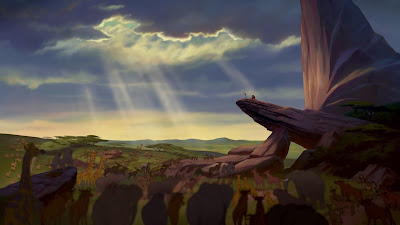
The Lion King takes place in Tanzania; a republic that is located in eastern Africa. Some of the environmental landscapes that were depicted within the movie were inspired from different areas that can be found within Tanzania. The Pride Rock which can be seen at the start of the movie and also in-between was served as the central location of The Lion King universe. The setting was conceptualised from the idea of how the Pope were to greet his people within the Vatican. . Olduvai Gorge; a paleoanthropological site that is located to the east of the Serengeti Plain of Tanzania was the environmental focus point towards the scene of where the wildebeest stampede was occurring as well as the death of King Mufasa. However other scenes throughout the movie such as the jungle where Timon and Pumba resides, the elephant graveyard, and the watering hole, etc, were not based on any environmental surroundings that can be found throughout Tanzania. References: http://ww...